Uncategorized

Uncategorized

EGPA Participates in the 5th Ethiopian CSOs’ Week and Joins the National CSO–Media Engagement Platform
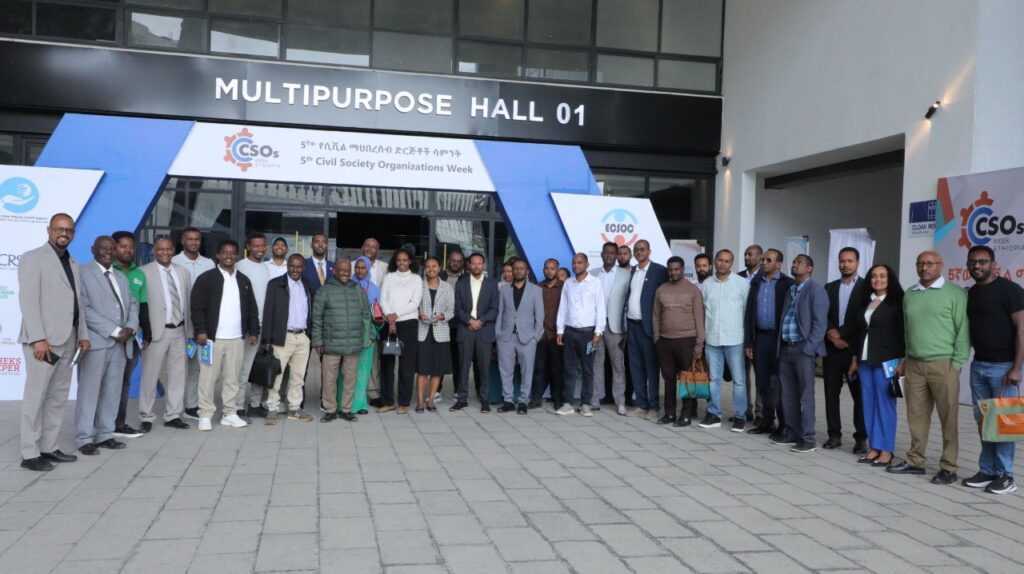
The Ethiopian Gender Professionals Association (EGPA) participated in the 5th Ethiopian CSOs’ Week, where diverse civil society organizations, media representatives, and governance stakeholders gathered to discuss collaboration for public accountability and inclusive development. As part of this national platform, EGPA engaged in discussions that emphasized the important role of civil society and the media in promoting transparency, strengthening democratic participation, and amplifying community voices.

During the event, EGPA was also recognized as one of the few members of the newly established CSO–Media Community of Practice (CoP) representing the Amhara Region. In addition, EGPA became a member of the nationally formed CSO–Media Engagement Platform, which aims to foster stronger dialogue, partnership, and collaboration between civil society organizations and media institutions across Ethiopia. The initiative was facilitated by the Consortium of Ethiopian Human Rights Organizations (CEHRO) in collaboration with Welthungerhilfe (WHH), with financial support from the European Union.

Uncategorized

EGPA Participates in Five-Day Training on the Role of CSOs in Transitional Justice

EGPA Participates in Five-Day Training on the Role of CSOs in Transitional Justice

EGPA Participates in Five-Day Training on the Role of CSOs in Transitional Justice

The Ethiopian Gender Professionals Association (EGPA) participated in a five-day training on the role of Civil Society Organizations (CSOs) in transitional justice, held from January 12–16, 2026, in Adama Town, Oromia Regional State. The training was organized by the Consortium for Networking and Development (COND) in collaboration with the Ethiopian Human Rights Commission (EHRC) and PEJ.

The training aimed to strengthen the capacity of civil society to engage meaningfully in Ethiopia’s transitional justice process and enhanced participants’ understanding of transitional justice concepts and practice. The trainers clearly emphasized that effective implementation of transitional justice requires commitment to finding the truth, ensuring accountability, undertaking institutional reform, documenting human rights violations, and applying other core principles of transitional justice as appropriate to the national context.

EGPA found the training highly fruitful, as it underscored the important role that professional associations can play in transitional justice processes. The discussions and practical sessions further motivated EGPA to actively assume its responsibilities in promoting victim-centered, gender-responsive, and rights-based transitional justice initiatives.

At the conclusion of the training, EGPA and other participating CSOs developed a collective action plan and committed to cascading similar trainings for other CSO staff and community members. EGPA extends its sincere appreciation to COND, the Ethiopian Human Rights Commission, and PEJ for organizing and facilitating this timely and impactful training.

Scroll to Top